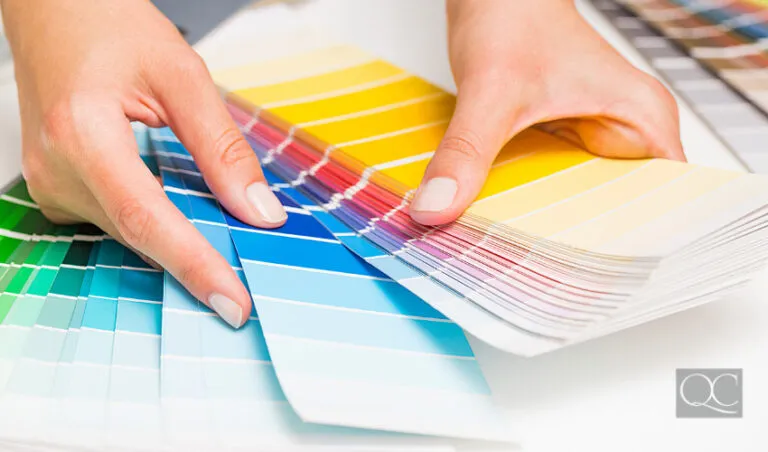
Sheen, paint quality and color cause more second thoughts than anything else on a paint job. These are short answers, written with Providence houses in mind: old plaster, a lot of trim and a wet, four-season climate.
Price ranges on this page are national figures published by HomeGuide for 2026. They are not our quotes. Local labor, paint prices and the condition of your own walls move the number up or down. Last checked October 2026.
What sheen should I use for walls and trim?
Use a low sheen on walls and a higher sheen on trim. Flat or matte hides flaws. Eggshell and satin wash better. Semi-gloss is the usual choice for trim, doors and cabinets because it takes knocks and wipes clean. The shinier the paint, the more it shows every dent and patch.
Eggshell or satin for living room walls?
Eggshell suits most living rooms. It has a soft glow, hides more than satin and still wipes clean. Satin is a step shinier and tougher, and it suits homes with small children or pets. On old plaster walls, eggshell or matte is kinder than satin.
Flat or eggshell to hide bad walls?
Flat hides bad walls best. It does not reflect light, so waves, patches and old cracks in plaster fade from view. The trade-off is that true flat marks more easily. A washable matte is a good middle choice for old Providence walls. Ceilings are nearly always painted flat.
Should trim be satin or semi-gloss?
Semi-gloss is the traditional choice for trim and the easiest to clean. Satin is a fair choice when old trim is dented and built up with paint, because it shows less of the damage. On the wide, detailed casings in older houses, either works. It comes down to how crisp you want the woodwork to look.
What is the best paint for a bathroom or kitchen?
The best bathroom or kitchen paint is a washable, moisture-resistant finish in satin or semi-gloss, or a paint made for baths that resists mildew in a lower sheen. Kitchens need a finish that stands up to wiping off grease. In a bathroom without a fan, no paint will hold up for long, so ventilation comes first.
What is the best paint for a high-traffic hallway?
For a busy hallway use a scrubbable eggshell or satin from a better paint line. Hallways and stairwells take hands, bags and furniture. In the shared stair halls of multi-family houses, a tougher satin on the walls and semi-gloss on the trim and railings is common.
What is the best paint for exterior walls in this climate?
A good quality 100 percent acrylic exterior paint is the usual choice for the outside of a Providence house. It stays flexible through freeze and thaw, lets a little moisture pass through and resists mildew in humid summers. Bare wood needs a suitable primer under it. Near the Bay, salt and wind make the quality of the prep and the paint matter even more.
Can I use the same paint inside and outside?
No. Do not use interior paint on the outside, and exterior paint is not meant for indoor rooms. Interior paint is made to be washed and to resist scuffs. Exterior paint is made to flex with heat and cold and to resist sun and mildew. Interior paint used outside fails quickly in New England weather.
Does expensive paint last longer than cheap paint?
Usually, yes. More expensive paint has more and better resin and pigment than cheap paint, so it covers in fewer coats and holds its color longer. National figures put paint at $20 to $80 per gallon. Labor is 70% to 85% of an interior job by the same source, so saving on paint saves little and can cost a repaint sooner.
Is one paint brand really better than another?
The product line matters more than the brand. Every major brand sells a budget line and a top line, and the gap between those two is bigger than the gap between brands. Compare the specific product, not the name on the can. We choose paint for the surface and the local weather. Ask us what we would use for your job and why.
How many coats of paint do I need?
Two coats is the standard, and it is what we quote. One coat can work when the same color goes over sound paint. A big color change, new drywall, patched walls or bare wood needs primer plus two coats.
How do I cover dark paint with a light color?
Prime first. A coat of primer over the dark wall, then two coats of the light color, covers better than three or four coats of paint alone. Deep reds and blues are the hardest to cover with white.
Why does the same color look different in different rooms?
A color looks different because the light is different. North rooms get cool, grey light. South and west rooms get warm light. Trees, floors, lamps and the house next door all tint a wall. In Providence, low winter light and summer leaf shade change a room a great deal. Test a large sample in each room before you decide.
What white will not look yellow?
A white with a neutral or slightly cool base will not look yellow. Creamy whites have yellow in them, and warm lamps and old oak floors bring it out. Very cool whites can look blue or grey in north light. Old oil-based trim paint also yellows with age, so a new white beside it can make the old paint look dingy. Sample two or three whites side by side.
How do I pick an exterior color that matches my roof and brick?
Start with what will not change: the roof, the brick or stone foundation, the chimney and the front steps. Choose a body color that sits well with those, then a trim color, then an accent for the door. A grey roof suits most colors. A brown or red roof and red brick call for warmer colors. On a Victorian, the trim, sashes and details can each take their own color.
How much paint do I need?
One gallon covers 300 to 400 square feet, by the national figures. HomeGuide's rule of thumb for one coat is 1 gallon for an average bathroom, 2 for an average room and 3 for a large room. Double that for two coats. Rough plaster, bare wood and cedar shingles drink more.
Should the painter supply the paint or should I buy it?
It is usually better for the painter to supply the paint. The painter knows how much is needed, picks the right product for each surface and is answerable for the result. If you want to buy the paint yourself, agree on the exact product and amount first, and expect the quote to be labor only.